
Last week, Booknik thought about a career of an alchemist or a shochet but he decided to become a prophet instead, and a vegetarian to boot; he destroyed borders, tore masks off, rolled down the stairs, befriended an oak, walked in Lisbon, talked to a legendary Jewish collective farmer about raising poultry and growing dahlias, and danced at the Yiddish Fest. In the meantime, Booknik Jr. became disappointed in entomology, and took a great interest in poetry.
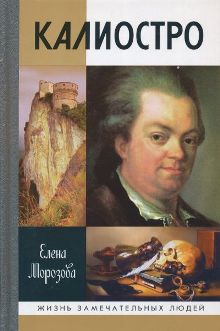
Cagliostro, by Ye.V. Morozova
Count Alessandro di Cagliostro AKA Giuseppe Balsamo was not the only on magician and alchemist who conquered European capitals in the 18th century. The Count of St. Germain also toured in Europe at that time, together with Casanova and other “masters of ancient lore.” Even one Jew was in their company, the younger son of the famous rabbi Jonathan Eybeschutz, Wolf Jonas Eybeschutz, who declared himself a prophet.
Booknik’s reviewer Yevgeny Levin was inspired by his success, and so he started on the Kabbalah, and is now thinking about a European tour.
The Pulse of the Hungry Life
A Small Death in Lisbon, by Robert Wilson
The book by Robert Wilson tells about the evil that imprints on human destinies. The echo of war crimes comes back through the decades, and the innocent generations become its new victims. To think about the past is important and crucial, but even when the mistakes have been admitted, and the stolen gold returned to the victims’ descendants, the ghost of sadness does not leave those ancient streets. Booknik’s intrepid reviewer Yevgenia Ritz walked the streets of Lisbon.
…and many other ghastly ghosts in the Books & Reviews section.

Mikhail Lvovich Grinberg is the prominent participant of the Jewish community building, education, and book publishing. He is the founder and the first rector of the Jewish University in Moscow, and the head of the “Gesharim / Bridges of Culture” Publishers.
Booknik’ managing editor Galina Zelenina assuaged her spiritual appetites by discussing Mikhail Grinberg’s eventful biography with him, drinking tea with very small but immaculately kosher bread rings.
…and many other convertible conversations in the Articles & Interviews section.
There Are Minorities in Which Documents Dance
On February 19 through 26, in Moscow’s Sakharov Center there the International Theater Laboratory was held, “Destroying Borders: Working with Documents.” For a whole week, young theater directors, designers, artists, and theater critics from Germany, Poland, and Russia experimented with different genres using documents as the basis for their exercises. They had court verdicts, press releases, interviews, and memoirs, in short, they used everything that could testify to the life of minorities.
Booknik’s omnipresent reporter Mila Dubrovina talked with one of the laboratory’s curators, the director, playwright, journalist, and editor Mikhail Kaluzhsky.
The Total Carnavalization
Every year, Israeli municipalities seem to compete with each other in coughing up money for Purim carnivals, and processions. This year, in Tel Aviv, they had carnival costumes even for bicycles, not only humans, and dogs. In Holon, they constructed dozens of humongous dolls. In Ramat HaSharon, they imported the snow from the far-away Mount Hermon. In Jerusalem, though, they decided that the snow is too trivial in itself, so they built an entire city of ice before Purim.
Booknik’s fast-travelling Israeli reporter Ariel Bulstein took part in the most of them, and took pictures, do you recognize him in disguise?
…and many other travestial travellings in the Events & Reports section.
Five Stories about Weird Customs from Linor Goralik:
A Jewish co-worker approached me after the planning session on Thursday, saying, “I’m sorry, I’ll have to leave tomorrow at four. I have the Shabbat.” “Easy, I said, no problem.” Then I asked Katya, “What is a Shabbat?” It turned out, they have it every week.

The stairs in Jerusalem are not an internal concept, they have always been external. They appeared here long before they started building high-rises. The heart of the matter is the anticlinal plateau. The hills. And, of course, the terrace development that will always look like a mad and maddening staircase.
We shall not criticize Booknik’s contributor Mikhail Korol for preferring riding streetcars to climbing stairs.
Desktop Pics
Extremely Loud & Incredibly Close, directed by Stephen Daldry
Oskar is nine, he does not watch TV but he collects various things, and he writes letters to Kofi Annan, Bill Gates, and Vladimir Putin. He is afraid of elevators, bridges, and open spaces. He does not like to talk to strangers yet he talks to himself all the time. His father dies on September 11, in the World Trade Center tower, and a year after his death, Oskar goes on a quest through New York, to solve the final riddle his dad had left him. The film is based on Jonathan Safran Foer’s bestselling novel with the same title, and the impressions on the movie are shared extremely loudly by Booknik’s film critic Masha Tuuborg who is incredibly close to all our readers.
…and many other illuminating illuminations in the Columns & Columns section.
A Ditty in Defense of the Lone Oak
The essay by our Israeli contributor and Booknik’s good old friend Miriam Gurova tells about her friend. Miriam’s friend is our friend even if this friend is a tree. It all started, she writes, when someone called a good friend a baobab. According to Vladimir Vysotsky, an esteemed dendrologist, this means a dumb tree. Oh, I forgot to mention that this friend of mine is a tree. Not just any old tree but The Most Famous Tree in Israel, Alon Ha'Boded, The Lone Oak Tree. The Tree of Returning. Poems, songs, and even lines in history textbooks have been written about it. The botanists have decided that it is no less than 700 years old.
…and many other threesome treetops in the Stories & Essays section.
Hebrarium, the Lexicon of Jewish Whatnots: Sh-6
Why will Kirill Chichayev never be a shochet? What does a Shemot tell us? Who is the basis of Shekinah? Watch our Sh-Hebrarium, and you will know it too.
The Yiddish Fest 2012: The Jam Session
Booknik is proud to invite you to watch the video version of the Yiddish Fest 2012. Together, we shall be able to not only attend the gala concert but also see what transpired in the wings of the festival. Every week, Booknik’s video channel will give you the highlights of concerts, interviews with musicians, and insider peeks from their rehearsals. We shall begin with the finale though, and remember how late at the Purim night, when no one could distinguish Mordecai from Hamman any more, not to mention iambus from trochee, when the carriage had long turned into a pumpkin, the subway closed, and in Arena club there remained only the staunchest music lovers, the musicians came down from stage, and cooked some sweet jam together with the audience.
…and many other sweet reminiscences in the Video Blog section.

What does “ATA” say to the Israelis? Nothing, to the ones who grew up in the 1990s. Nevertheless, those who were young in the 1960s will remember flowered mini dresses, and Manhattan-style shirts. Alas, there are too few of those who wore khaki shorts or ATA blue shirts in the 1930s. The ATA factory dressed the entire country, from the prime minister to rank-and-file soldiers. David Ben Gurion himself was the “face” of the company, wearing trousers and shirts made by them. ATA was the official supplier of the Israeli Defense Army, British police, Israeli schools, and kibbutzim.
The Hide-and-Seek with the Rain. The Poetry by Inna Gamazkova
Inna Gamazkova published a lot of books, and she is one of the popular authors of our magazines for children. By trade though, she is not a poet at all, she is an entomologist. This is probably the reason why in almost all her poems there are insects. Read on about distant and close relatives of the famous Clicking Fly!
…and many other interesting insects at Booknik Jr., also known as Family Booknik, our own web site for kids and their parents.
Your old man's about to knock on the sky and listen to the sound. Booknik and Family Booknik are supported by the AVI CHAI Foundation.